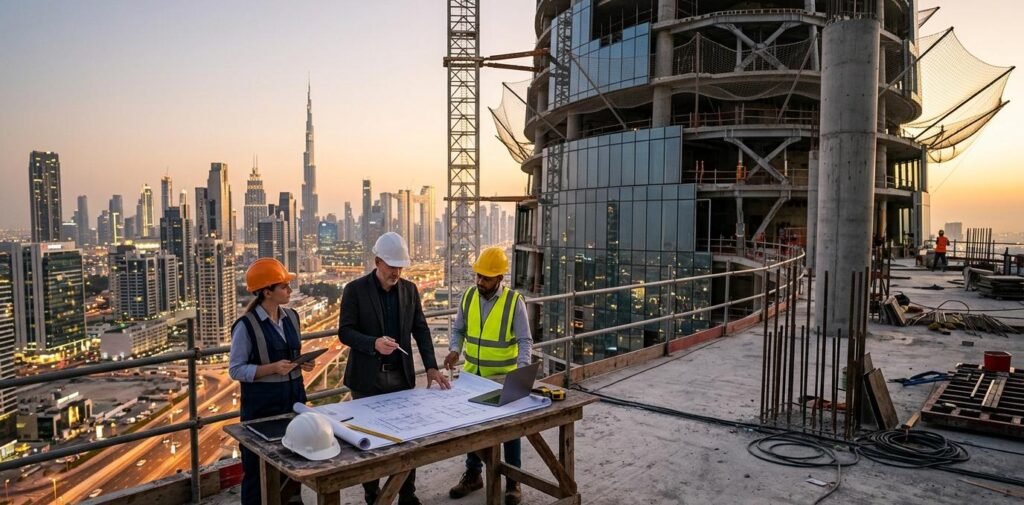

Creating Safer and Healthier Workplaces
Worker welfare and occupational health and safety are essential elements of successful workforce management. In the UAE, businesses across construction, engineering, manufacturing, and facility management must pay close attention to workplace safety and employee welfare.
A safe working environment protects employees, supports productivity, reduces operational risks, and promotes a professional workplace culture.
1. Providing Personal Protective Equipment (PPE)
Personal Protective Equipment is essential for workers operating in environments where occupational hazards may exist.
Depending on the nature of the job, PPE may include:
- Safety helmets.
- Safety shoes.
- High-visibility vests.
- Protective gloves.
- Safety glasses.
- Hearing protection.
- Respiratory protection.
Employers should ensure that workers receive appropriate protective equipment and understand how to use it correctly.
2. Safety Training and Awareness
Workers should receive suitable safety instructions before starting their duties and whenever job requirements or workplace risks change.
Training may cover:
- General site safety procedures.
- Working at heights.
- Electrical safety.
- Equipment and machinery operation.
- Manual handling.
- Emergency response procedures.
- Fire prevention and evacuation.
3. Heat Stress Prevention
Working outdoors in the UAE can involve exposure to high temperatures, particularly during summer.
Employers and project operators should implement applicable heat-stress prevention measures, including suitable rest arrangements, drinking water, shaded areas, and compliance with official midday work restrictions.
4. Employee Health and Welfare
Worker welfare involves more than workplace safety. It also includes appropriate accommodation where applicable, access to drinking water, sanitation facilities, and suitable working and rest arrangements.
A responsible workforce management approach considers employees’ well-being throughout their employment.
5. The Role of Manpower Supply Companies
Professional manpower supply providers can contribute to safer working environments by:
- Selecting workers with suitable experience.
- Coordinating required safety training.
- Supporting PPE arrangements.
- Maintaining proper workforce documentation.
- Communicating site safety requirements.
- Coordinating with clients and site management.
6. Building a Strong Safety Culture
Workplace safety is a shared responsibility. Employers, supervisors, safety officers, and employees must work together to identify hazards, follow procedures, and report unsafe conditions.
Conclusion
Investing in worker welfare and occupational health and safety is an investment in business success. By promoting safe working practices and responsible workforce management, businesses can protect their employees and support sustainable operations across the UAE.